
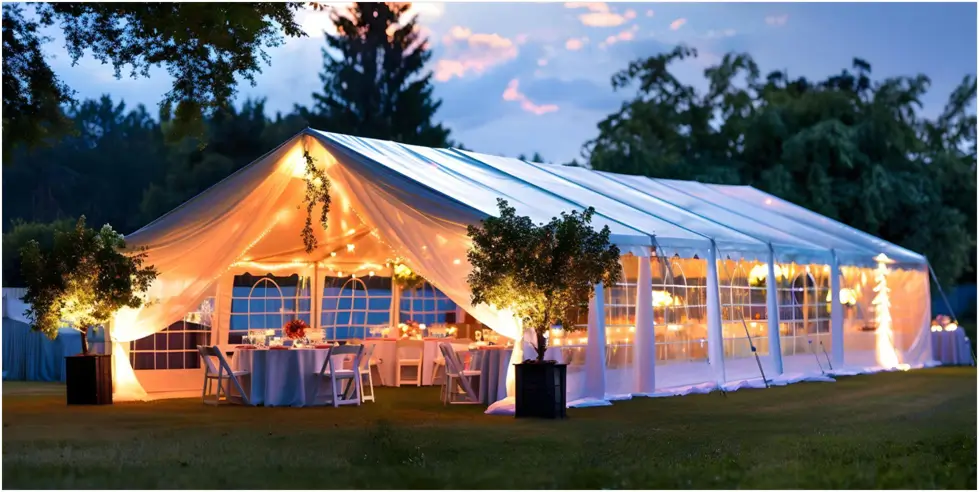
Planning an outdoor event means preparing for more than just sunshine and clear skies. One unexpected gust of wind can quickly turn a beautiful tent setup into a serious concern. So, how much wind can different types of event tents actually handle?
Quick answer: From sudden gusts at a backyard party to stronger winds during a large wedding, knowing a tent’s wind limits, anchoring requirements, and structural features can help you make a safer, smarter choice. After all, a beautiful event starts with a setup that’s prepared for whatever the weather has in store.
At AllState Party & Tent Rentals, we can help you select event tent options suited to your event and venue. Our team also helps you choose the right setup, ensuring your event has the appropriate equipment for a comfortable outdoor experience.
In this blog, we’ll help you choose the right setup and plan with confidence, so your event stays safe, comfortable, and memorable, whatever the forecast brings.
Different Types of Event Tents: A Complete Guide to Safe Outdoor Event Planning
How Much Wind Can Different Types of Event Tents Handle?
There’s no single wind rating that applies to every tent. The safe operating limit depends on the manufacturer’s specifications, engineering, installation, and local regulations.
Let’s look at some common tent styles.
1. Pole Tents
Pole tents are popular for weddings, graduations, parties, and other outdoor celebrations. They typically use center poles and perimeter poles to support the fabric canopy.
Because they’re flexible and relatively lightweight, pole tents can be more sensitive to strong winds than engineered frame structures.
Their stability depends heavily on:
- Proper staking
- Correct tensioning
- Suitable soil conditions
- Professional installation
Pole tents are excellent for many outdoor events, but they aren’t designed to withstand severe weather indefinitely. If strong winds or storms are forecast, the rental company may recommend taking precautions or postponing the event.
2. Frame Tents
Frame tents use a metal framework to support the canopy, eliminating the need for center poles. This makes them particularly useful when you want an open interior layout.
They can offer good stability when properly installed and anchored. However, their performance still depends on the specific design and manufacturer’s specifications.
A frame tent isn’t automatically “windproof.” Its anchoring system is crucial, and the installation surface makes a difference.
For example, a properly secured frame tent on a suitable surface may perform well under moderate wind conditions, while the same tent installed incorrectly could become unstable much sooner.
3. High-Peak or Tension-Style Tents
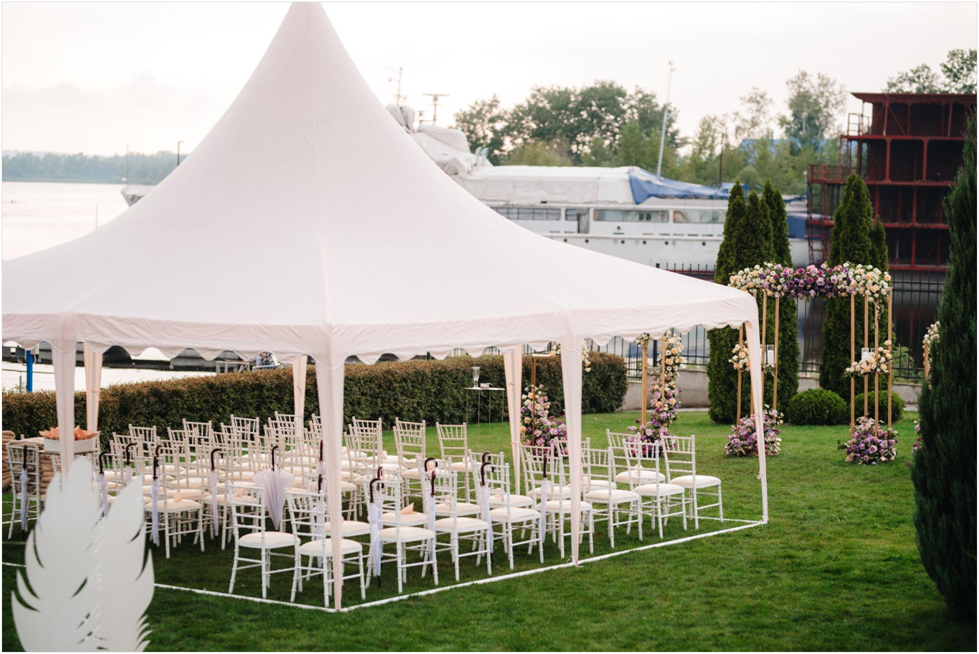
High-peak tents are known for their elegant appearance and dramatic peaks. They’re often chosen for weddings and upscale celebrations because they look beautiful in photographs.
However, their wind performance varies significantly by design, size, and anchoring method. The taller profile can also be more exposed to wind forces.
This doesn’t mean they’re unsuitable for outdoor events. It simply means the tent should be professionally installed and monitored according to manufacturer and rental-company guidelines.
4. Clear-Span and Engineered Structures
For larger events, engineered clear-span structures can provide a more substantial temporary venue. These structures are often designed for specific applications and may have greater structural capabilities than basic party tents.
Their wind resistance is typically determined through engineering calculations and manufacturer specifications rather than a simple general rule.
For large weddings, festivals, corporate events, and commercial gatherings, always ask about the structure’s documented wind rating and the conditions under which that rating applies.
What Happens When Wind Gets Too Strong?
When weather conditions become unsafe, professional event rental companies may recommend lowering, securing, evacuating, or removing a tent.
It’s important to understand that a tent’s wind rating isn’t a guarantee that it will remain safe in every situation. Ratings can depend on specific installation requirements and environmental conditions.
If strong winds are expected, event organizers should:
- Monitor reliable weather forecasts.
- Stay in contact with the rental company.
- Follow manufacturer and professional recommendations.
- Keep guests away from unsafe structures.
- Have a backup plan for severe weather.
- Never attempt to reinforce or modify a tent without professional guidance.
Choosing a tent isn’t simply about picking the style that looks best in your event photos. AllState Party & Tent Rentals can help you evaluate your event requirements and choose an appropriate tent rental solution for your celebration.
Conclusion: Plan for the Weather, Not Just the Celebration
Understanding the wind resistance of different types of event tents is an essential part of responsible outdoor event planning. Pole tents, frame tents, high-peak tents, and engineered structures all have different characteristics, and their ability to handle wind depends on far more than tent style alone.
Professional installation, proper anchoring, weather monitoring, and a realistic backup plan can help you prepare for changing conditions. Most importantly, never ignore severe weather warnings simply because an event tent is already installed.
Planning an Outdoor Celebration? Contact AllState Party & Tent Rentals Today!
We help you bring your vision together with our dependable tables, chairs, party rental equipment, and event tent rentals in NY, Westchester County, Bergen County, and Rockland County.
Contact us and take the first step toward creating a comfortable, well-planned outdoor celebration!
FAQs About Different Types of Event Tents
What wind speed is too high for an event tent?
There isn’t one universal wind-speed limit for every tent. Safe limits vary by tent design, manufacturer specifications, installation method, anchoring, and local conditions. Always follow the rental company’s guidance and the manufacturer’s documented limits.
Are frame tents safer in high winds than pole tents?
Not necessarily in every situation. Frame tents may offer structural advantages, but their performance still depends on proper anchoring and installation. The specific tent model and site conditions matter considerably.
Can I use a tent during a windy outdoor event?
Possibly, depending on the wind conditions and tent specifications. Moderate wind may be manageable for a properly installed tent, but strong gusts or severe weather can make using an outdoor tent unsafe. Consult your rental provider and monitor conditions closely.
What should I do if strong winds are forecast?
Contact your rental company as soon as possible. They can advise you on the safest course of action based on the tent type, installation, and forecast. If conditions become unsafe, be prepared to postpone, relocate, or cancel the event.